Archives
-
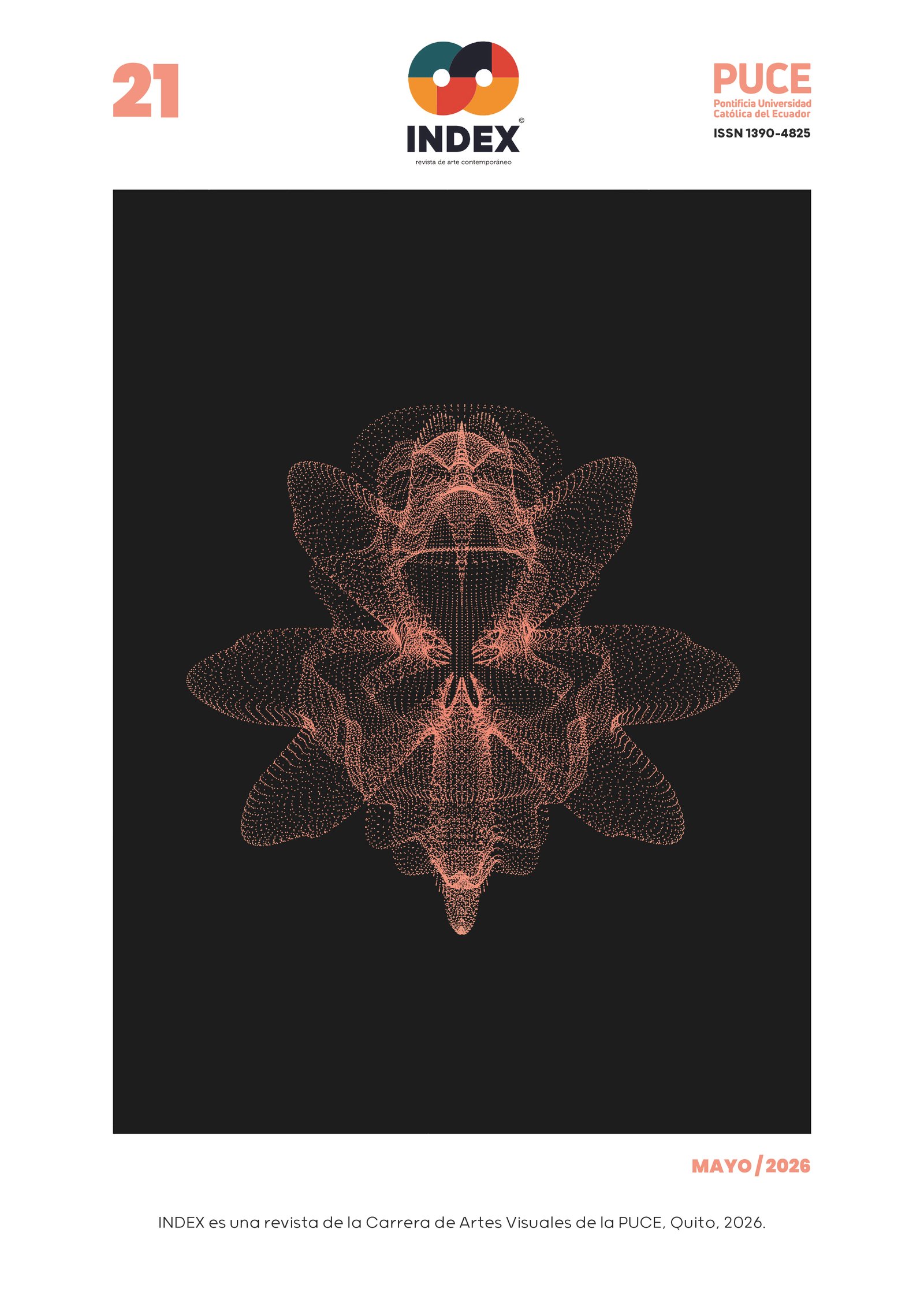
No. 21 (2026)
Issue 21 of ÍNDEX Arte Contemporáneo features a dossier devoted to speculative realism, object-oriented ontology, data as a problem of representation, and questions concerning the future of the artwork in posthuman and non-anthropocentric scenarios. The issue also includes articles on visual culture, record cover design, artificial intelligence, alternative photographic printing techniques, textiles, religious fiction, Chilean art, urban practices, and sound journeys. It concludes with the curatorial section Pródromo and the visual essay Materia Blanca, by Lux Monsalve, whose work is also featured on the cover of this edition.
-
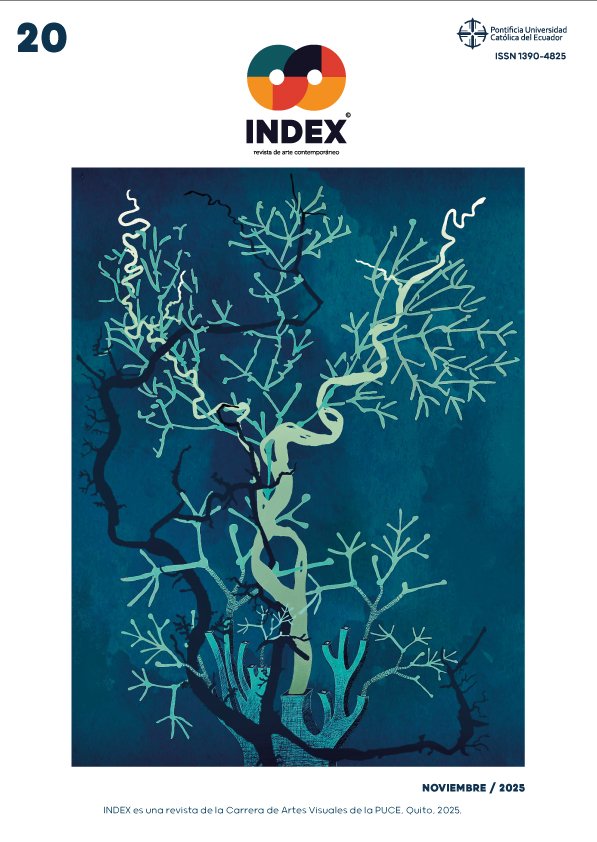
No. 20 (2025)
Issue 20 of ÍNDEX Arte Contemporáneo features on its cover Fernando Falconí’s work Cartografías para un árbol de agua, a series that brings together science, landscape, techné, and memory through the transformation of historical river maps. The issue also includes texts on biopolitics, creative processes, Andean imaginaries, and design research, and concludes with a curatorial reflection on Estiaje, an exhibition focused on collaborative practices, organic materials, and a poetics of care and ecological
-

No. 19 (2025)
With its 19th issue, INDEX, journal of contemporary art and visual culture, celebrates ten years of trajectory, reaffirming its commitment to critical reflection and to the diversity of voices within contemporary art. This edition features an interview with Ai Weiwei, a dossier devoted to sound art as a field of aesthetic, social, and political exploration, and a selection of texts addressing the relationships between art, memory, the body, technology, education, and society, further consolidating INDEX as a key platform for artistic thought in Ecuador and Latin America.
-

No. 18 (2024)
Issue 18 of ÍNDEX Arte Contemporáneo brings together reflections on the object, memory, image, and contemporary visuality through texts that range from the intertextuality of the object in Beatriz González’s work and a remembrance of Spencer Tunick’s intervention in Mexico City’s Zócalo, to emancipated images, women’s micropolitical voices in video art, the presence of Buenos Aires women artists from the first half of the twentieth century, and the construction of social imaginaries in virtuality. The issue is completed by Pamela Cevallos’s visual essay, Seats That Witness Time, and Giada Lusardi’s curatorial text on It All Started at Sunrise by José Luis Macas, shaping an edition focused on the relationships between art, memory, archive, politics, and visual perception.
-

No. 17 (2024)
Issue 17 of ÍNDEX Arte Contemporáneo brings together reflections on art, politics, urban space, critical thought, and contemporary practices. Among other contributions, it features texts on art and geology, the thought of Néstor García Canclini, the work of Guadalupe Maravilla, the tensions between aestheticization and politicization in Natalie Wynn, and performative approaches to domestic labor. The issue also includes a study on the destruction of urban space in Cuba, as well as Giada Lusardi’s curatorial text on Xavier Patiño, whose work also appears on the cover of this issue.
-
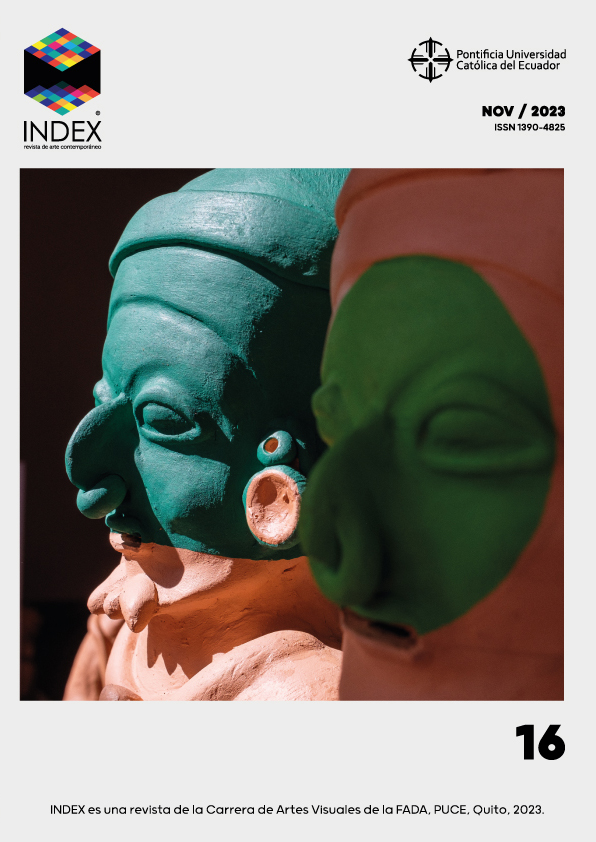
No. 16 (2023)
Issue 16 of ÍNDEX Arte Contemporáneo brings together texts on memory, archives, photography, contemporary art, heritage, and experimental practices. This edition highlights on its cover Pamela Cevallos’s work, presented at the 15th Cuenca Biennial, from which it reflects on heritage, archaeology, memory, and artisanal knowledge. The issue is completed by articles on research-creation, visual activism, multispecies relations, alternative photographic processes, and critical approaches to images and contemporaneity.
-
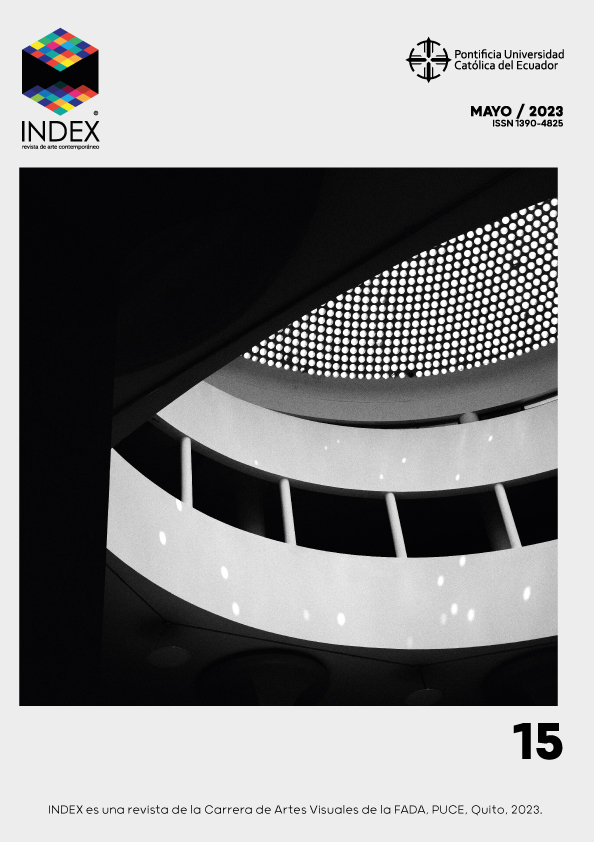
No. 15 (2023)
Issue 15 of ÍNDEX Arte Contemporáneo brings together texts on image, the body, identity, art education, craft, archives, and curatorship, offering a diverse overview of contemporary practices and debates. This edition highlights on its cover the work of Ricardo Bohórquez, discussed in Giada Lusardi’s curatorial text, where photography and Guayaquil’s modern architecture enter into dialogue through a sensitive approach to form, light, and urban memory.
-
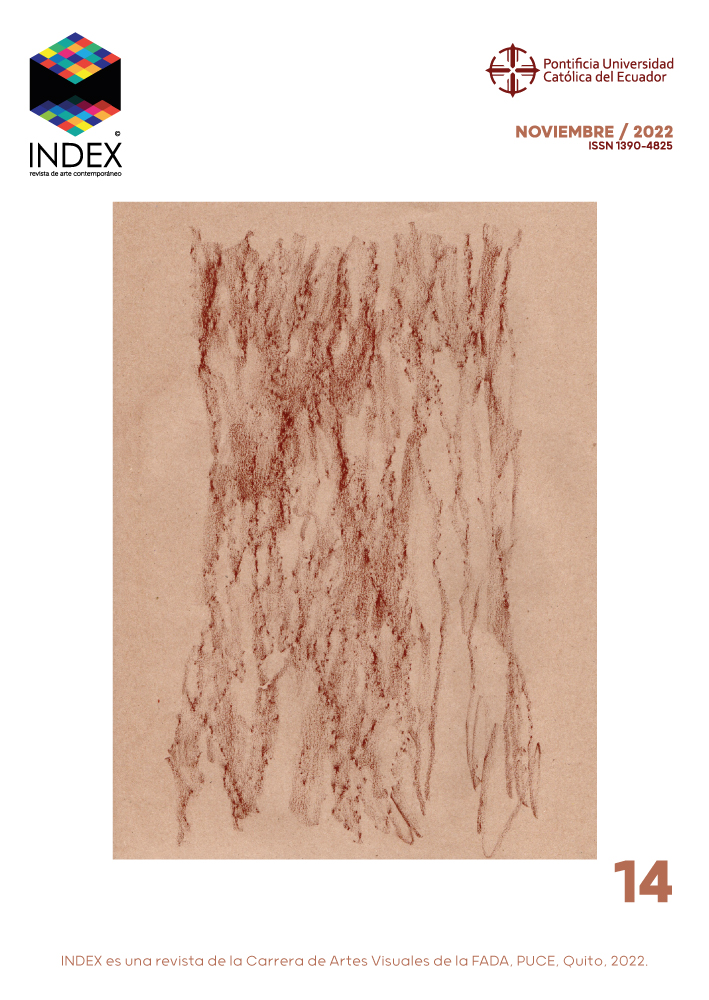
No. 14 (2022)
Issue 14 of ÍNDEX Arte Contemporáneo brings together texts on image, the body, domestic space, digital visuality, contemporary musealities, and representations of violence. This edition highlights on its cover the work of Pilar Flores, whose visual essay We the Trees offers a sensitive reflection on interdependence, breathing, care, and collaboration among species. The issue is completed by articles addressing photography, digital critique, virtual territorialities, and diverse contemporary forms of representation.
-
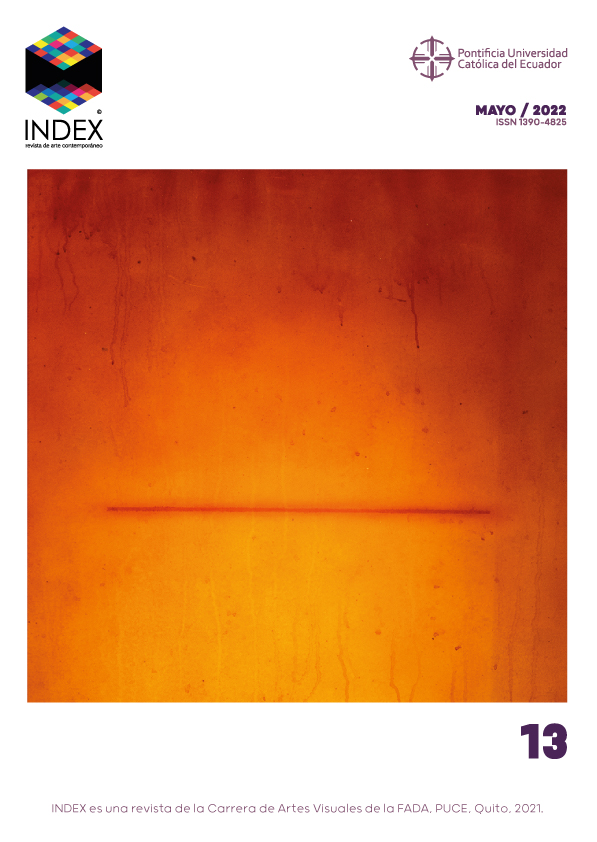
No. 13 (2022)
Issue 13 of ÍNDEX Arte Contemporáneo brings together reflections on contemporary art, the body, memory, affects, disability, childhood, curatorial practices, and intersections between art, technology, and the archive. This edition features on its cover the work of Juan Carlos León, discussed in the curatorial text The big picture, where his recent processes explore geographical and emotional transitions, healing materials, and new poetics linked to memory, ritual, and transformation.
-
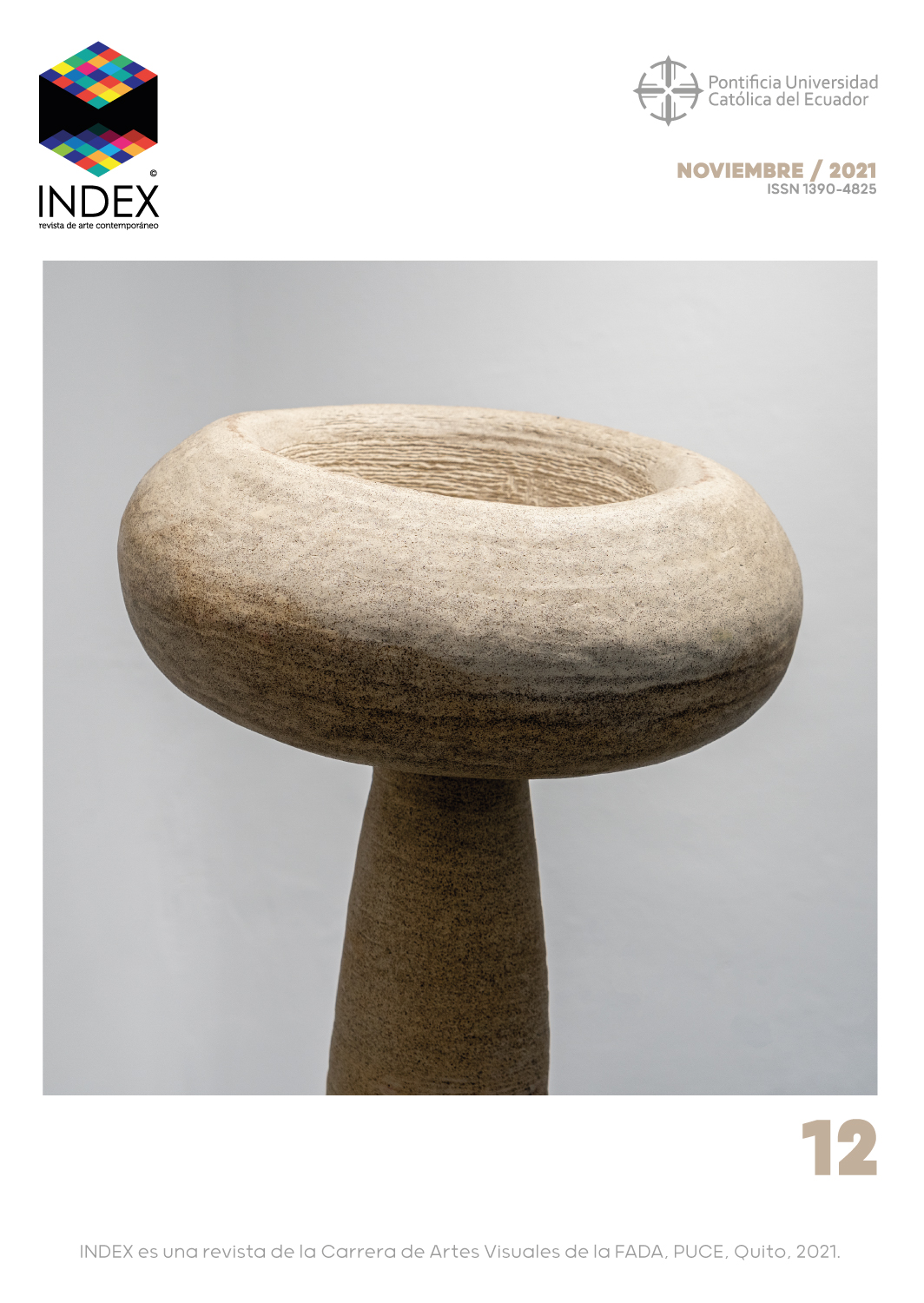
No. 12 (2021)
Issue 12 of ÍNDEX Arte Contemporáneo brings together reflections on decoloniality, image, archive, the body, digital visuality, memory, and the environment, through a set of texts that address key problems in contemporary Latin American art. This edition highlights on its cover the work of Consuelo Crespo, while articulating perspectives on art criticism, representation, territory, dissident practices, and visual ecologies, shaping an issue centered on the intersections of aesthetics, politics, and contemporary thought.
-
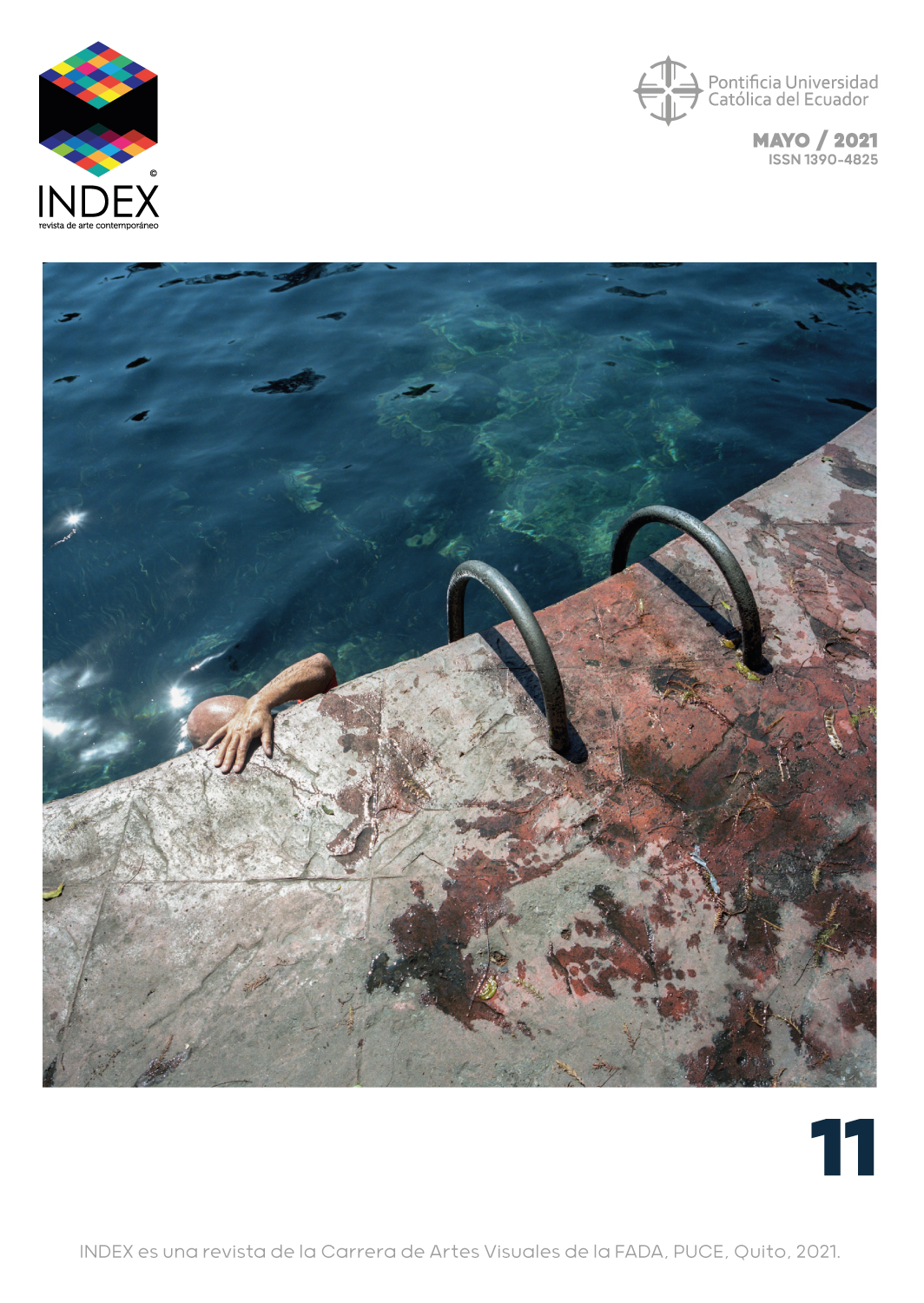
No. 11 (2021)
Issue 11 of ÍNDEX Arte Contemporáneo brings together texts on the circulation of Latin American art, image, archives, memory, migration, and pedagogical practices. This edition, featuring Alessandro Bo on the cover, brings together reflections on artistic neo-extractivism, the Baroque image in colonial Quito, the El Telégrafo Archive as a space for artistic and pedagogical experimentation, and the relationship between exhibition, childhood, and identity in Ernesto Pujol’s work.
-
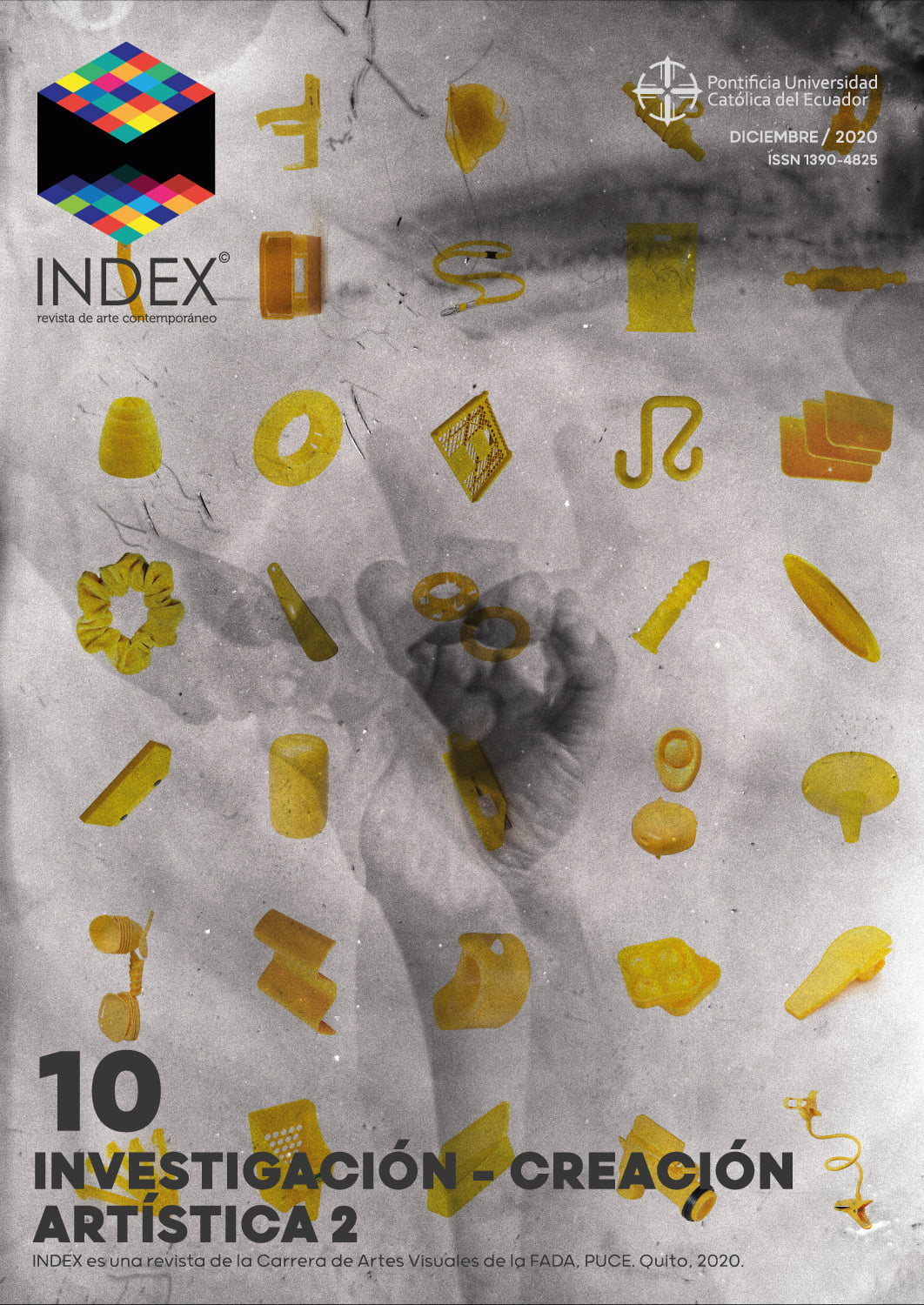
No. 10 (2020)
Issue 10 of ÍNDEX Arte Contemporáneo, featuring Ilich Castillo on the cover, brings together texts on research-creation, the body, image, urban space, artistic pedagogies, and contemporary debates around art. The issue addresses themes such as precarity, performance, archives, sexual dissidence, feminist practices, critical visuality, and creative methodologies, shaping an edition focused on the intersections between artistic production, thought, and experimentation.
-
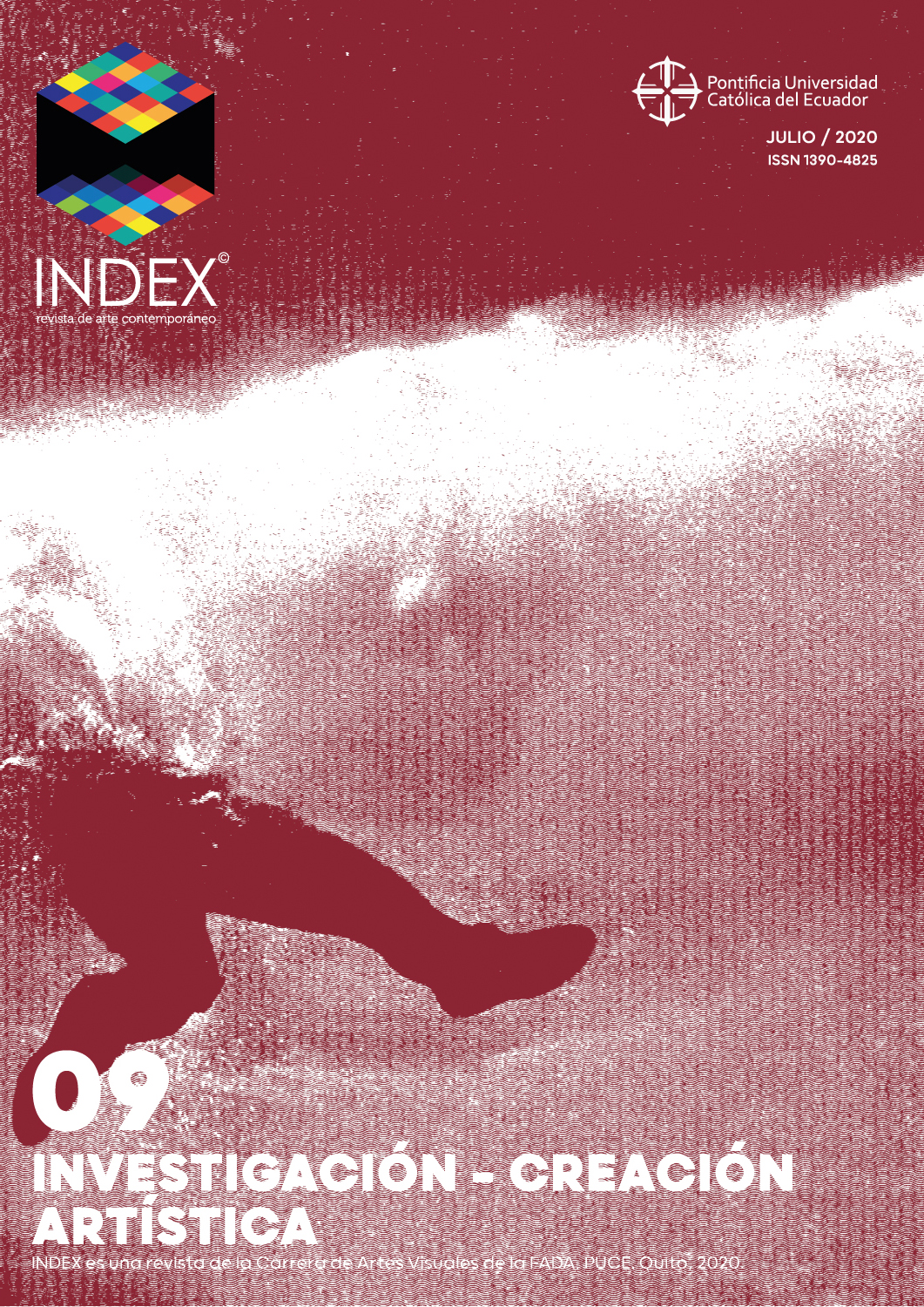
No. 09 (2020)
Issue 9 of ÍNDEX Arte Contemporáneo, featuring Suspended and about to fall by Manuela Ribadeneira on the cover, highlights the sound essay Sounds at an exhibition by the Ecuadorian collective Artes No Decorativas S.A., a proposal that revisits the exhibition Objetos de duda y de certeza through sound. The dossier, devoted to artistic research-creation, brings together reflections, methodologies, and dialogues that reveal the diversity of contemporary thought in this field, with contributions by Henk Borgdorff, Emiliano Cabana, Rey and Martín Hernández, and Gabriela Chérrez.
-
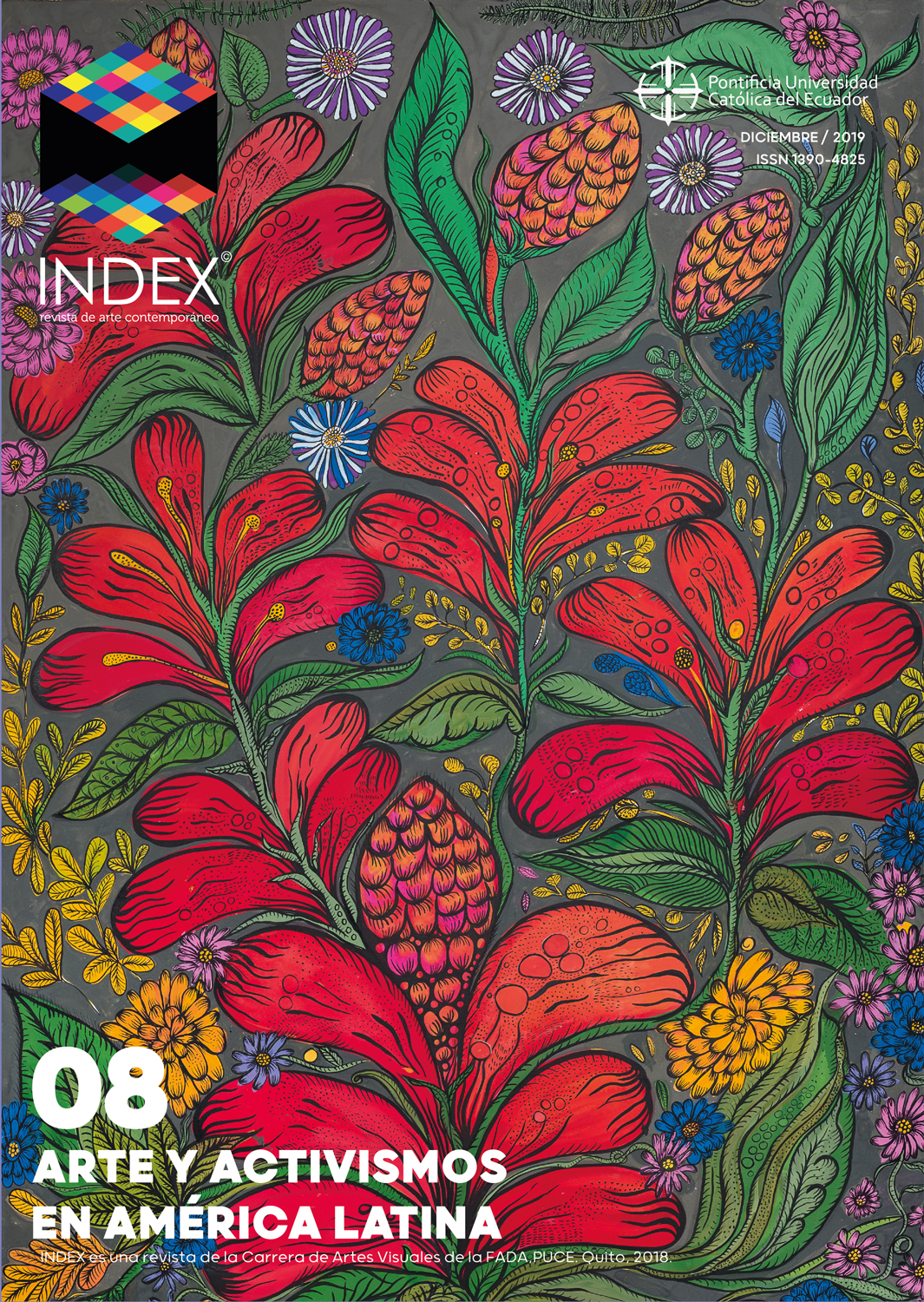
No. 08 (2019)
Issue 8 of ÍNDEX Arte Contemporáneo explores the relationship between art and activism in Latin America, bringing together texts that reflect on feminism, migration, racism, violence, memory, and political action within a turbulent regional context. The issue includes an interview with Graciela Carnevale on Tucumán Arde, Ana Fernández’s visual essay on the medicinal garden as a practice of care, and a curatorial section devoted to Amarillo, Azul y Roto: Art and Crisis in Ecuador in the 1990s, shaping an edition centered on art as a space for denunciation, reflection, and social transformation.
-
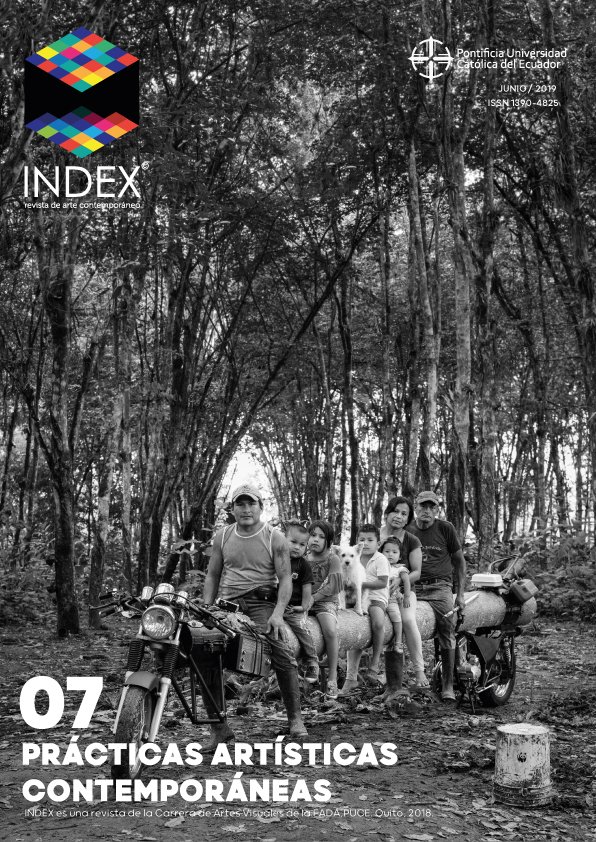
No. 07 (2019)
Issue 7 of ÍNDEX Arte Contemporáneo brings together in its dossier a range of methodological approaches to artistic practices, with contributions by Ecuadorian artists from different generations, from established figures such as Pilar Flores to younger collectives and projects linked to memory and political critique. The issue is completed by texts from across Ibero-America and by Adrián Balseca’s visual essay Estela Blanca, which offers a critical reflection on extractivism, history, and socio-environmental crisis.
-
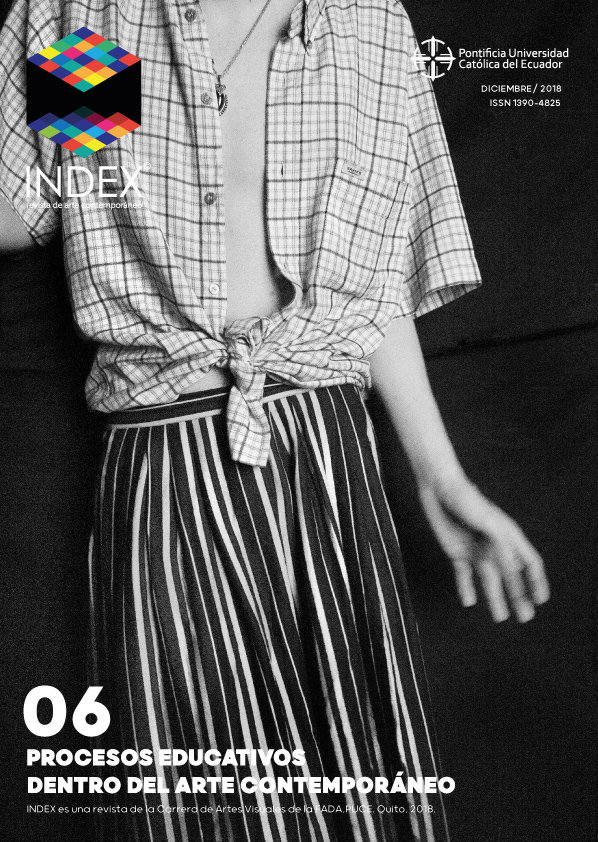
No. 06 (2018)
Issue 6 of ÍNDEX Arte Contemporáneo offers a broad view of the relationship between art and education, bringing together methodological experiences linked to new technologies, museum work, and pedagogical processes in diverse social contexts. The issue is complemented by texts on artistic thought, art history, and cultural studies, an interview with Celso Rojas, and the launch of the curatorial section, open to reflections on exhibitions and curatorial practices in Ecuador and Latin America.
-
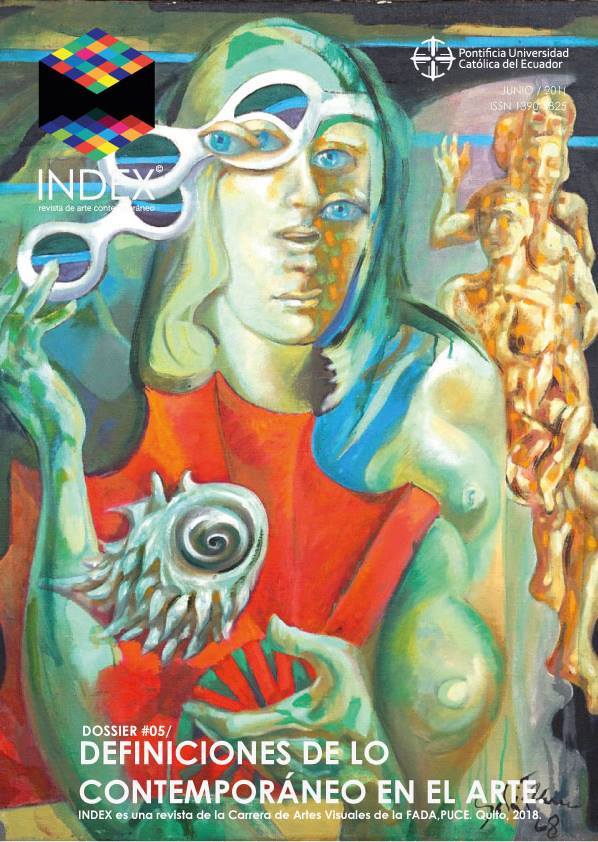
No. 05 (2018)
Issue 5 of ÍNDEX Arte Contemporáneo offers a plural reflection on definitions of the contemporary in art, bringing together critical analyses, case studies, and debates on methodologies, curatorship, and criticism in Latin America. The issue highlights texts on Eduardo Solá Franco, art criticism in Mexico, and curatorial heterotopias, and is complemented by articles on art education, design, and a review of the book Cuerpo Siamés.
-
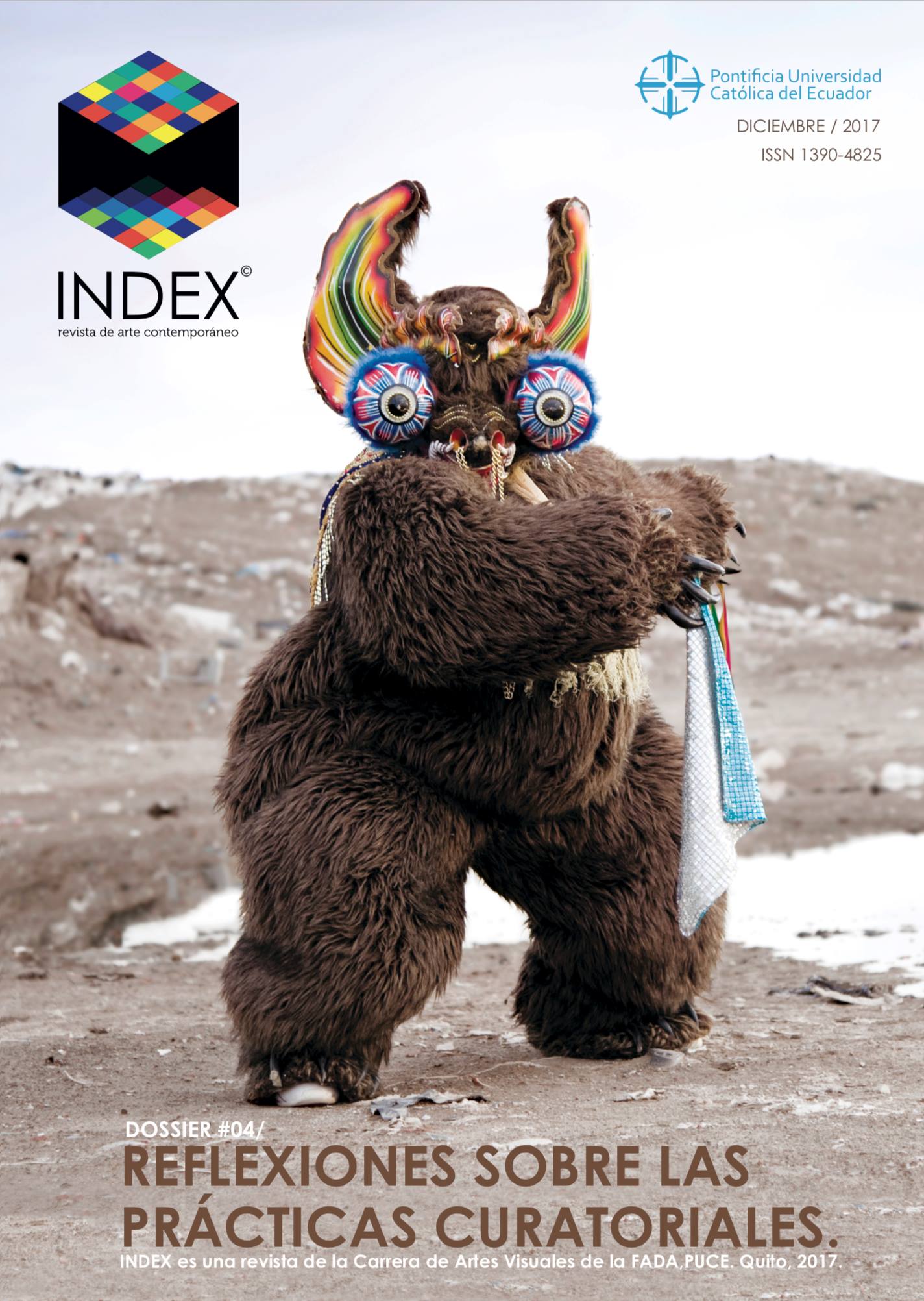
No. 04 (2017)
Issue 4 of ÍNDEX Arte Contemporáneo is devoted to curatorial practices, with reflections on institutions such as MoMA, the Cuenca Biennial, and emerging spaces like Khora in Quito. The issue is completed by texts on Republican-era art and contemporary artistic practices in the region, together with Demian Schopf’s visual essay Minor Choirs, which offers a reflection on the contemporary Andean world.
-
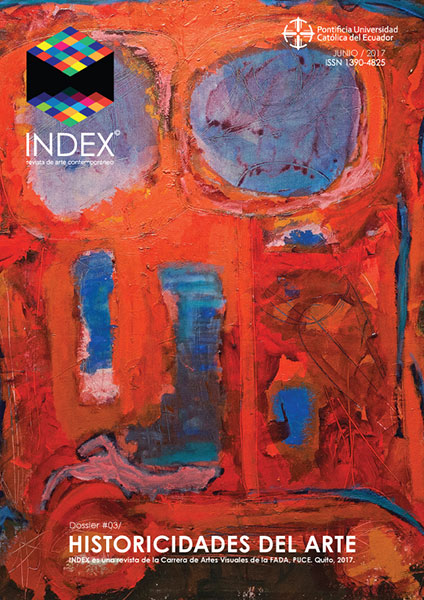
No. 03 (2017)
Issue 3 of ÍNDEX Arte Contemporáneo brings together reflections on the historicities of art in Latin America, with contributions related to the practices of Pablo Barriga, Álvaro Barrios, and Diego Barboza, as well as the LIPADA research project promoted by PUCE. The issue also introduces the Dialogues section, featuring a conversation between Luis Camnitzer and Paulina León, and is complemented by texts on museums in the age of digital culture and on artistic memory and research projects.
-
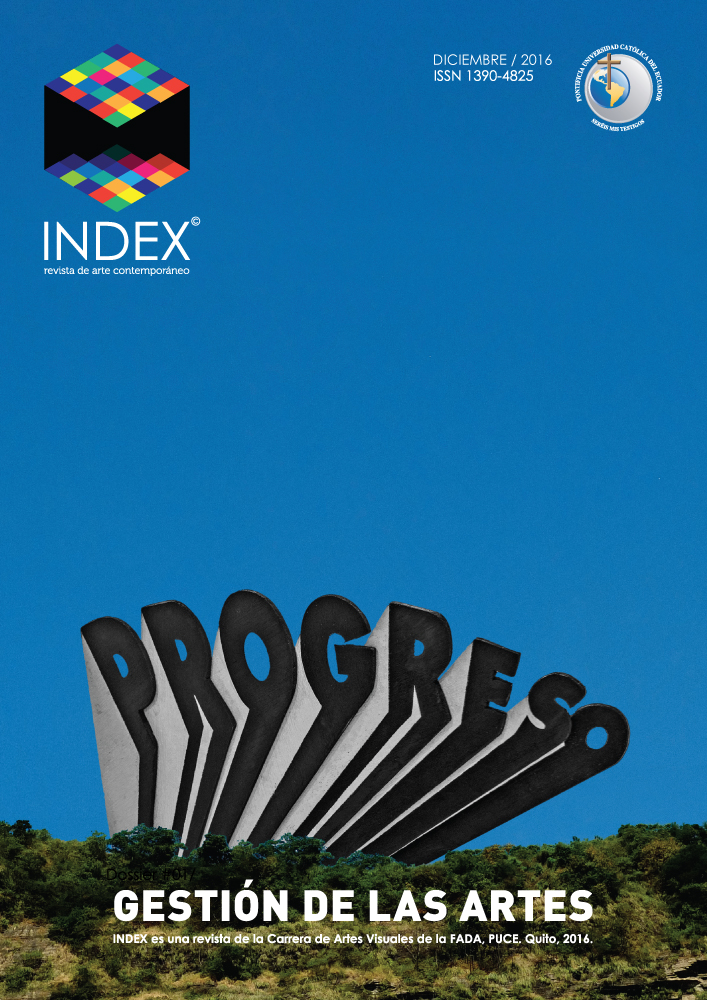
No. 02 (2016)
Issue 2 of ÍNDEX Arte Contemporáneo is devoted to arts management, bringing together reflections on its origins, challenges, and development in Latin America and Ecuador. Through essays and case studies, the issue presents cultural management as a fundamental tool for sustaining and enabling artistic projects in contexts marked by a lack of public policy, resources, and institutional support.
-
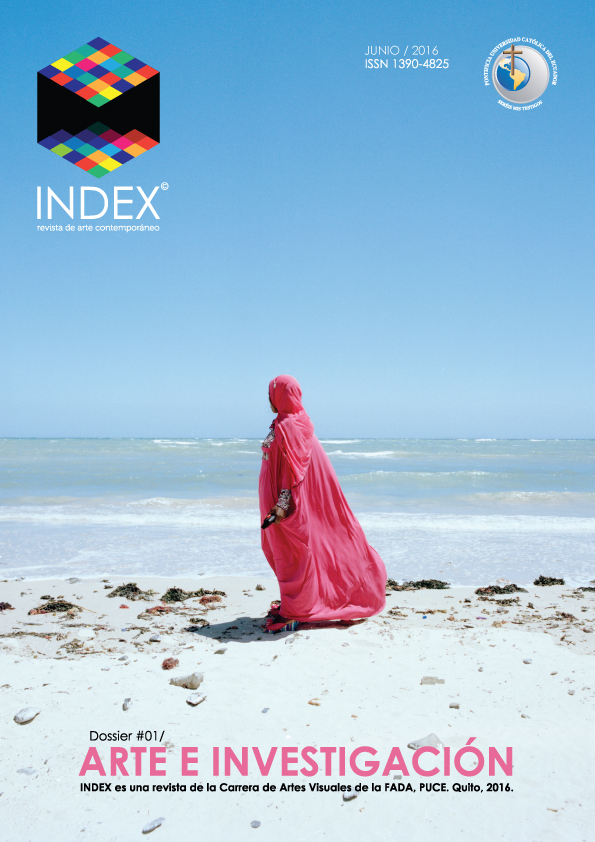
No. 01 (2016)
Issue 1 of ÍNDEX Arte Contemporáneo is devoted to the relationship between art and research, proposing a reflection on artistic research beyond traditional methodologies. From this first dossier onward, the journal presents art as a space for knowledge production, capable of developing its own methodologies and of entering into dialogue with diverse fields and areas of knowledge.
-
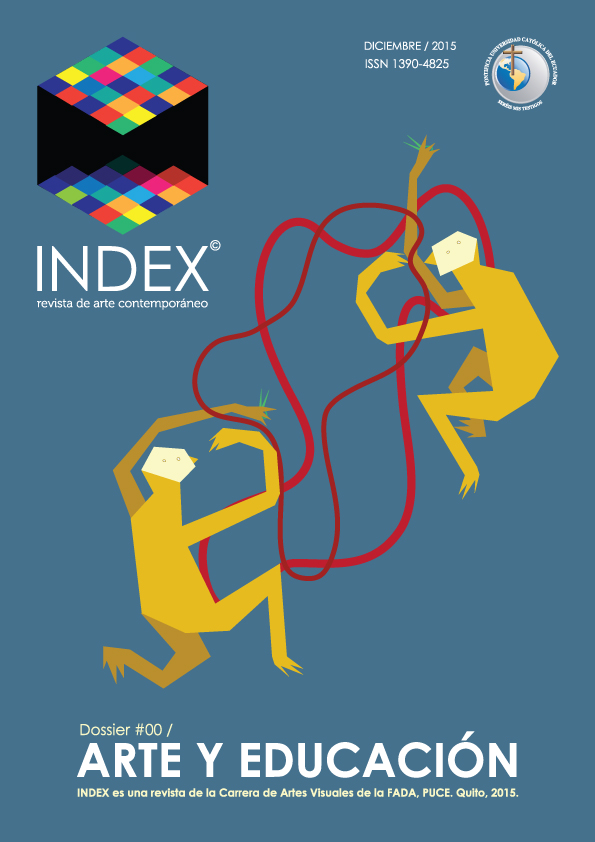
No. 00 (2015)
Issue 0 of ÍNDEX Arte Contemporáneo offers a panoramic review of the processes, methodologies, history, and academic dimensions of art education, understood as an essential foundation for sustaining artistic research and connecting artistic production with real contexts. From this starting point, the journal presents art as a means of generating knowledge, reflection, and critical thought.